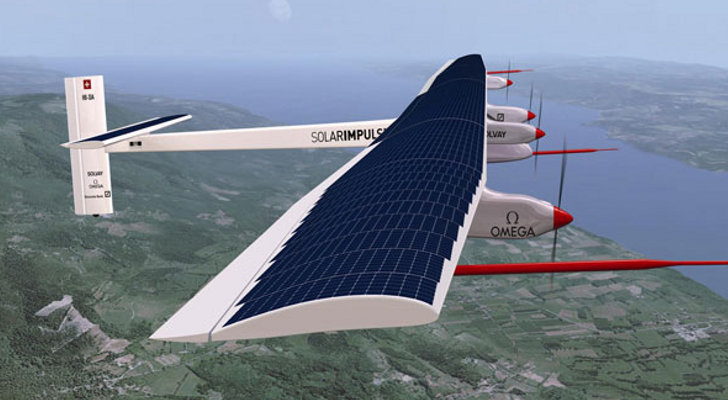
Imagine flying across the world without using a single drop of fuel — no carbon emissions, no noise pollution, just pure sunlight powering your journey through the sky.
Sounds like science fiction? It’s not.
Solar-powered planes are already flying, proving that the future of aviation could be as clean and quiet as a sunny day.
Let’s explore how they work, why they matter, and whether we’ll ever see passenger jets powered by the sun.
The Basic Idea: Turning Sunlight into Flight
At the heart of solar-powered flight is one simple concept — convert sunlight into energy, and use that energy to power electric motors that drive the propellers.
Here’s how it works step by step:
- Solar panels on the wings capture sunlight.
- The sunlight is converted into electricity through photovoltaic cells.
- That electricity powers lightweight electric motors, spinning the propellers.
- Excess energy is stored in onboard batteries for night or cloudy conditions.
It’s flight powered directly by the same energy that fuels life on Earth — the Sun.
Meet the Pioneers: Solar Impulse 2
The most famous solar-powered aircraft so far is the Solar Impulse 2, a Swiss-engineered plane that flew around the world in 2016 — without using any fuel.
Here’s what made it special:
- 17,000 solar cells across its enormous 72-meter wingspan
- Four electric motors powered entirely by sunlight
- Flight duration: up to 5 days continuously
- Speed: around 90 km/h (slow but steady!)
It wasn’t fast — but it made history by proving that solar flight is possible.
The Engineering Challenges
Flying without fuel sounds great, but it’s not simple. Solar-powered planes face three major engineering hurdles:
1. Energy Density
Sunlight delivers only a limited amount of energy. Even with efficient panels, the power available per square meter is low — making it hard to generate enough thrust for large, heavy aircraft.
2. Battery Weight
Batteries store electricity, but they’re much heavier than jet fuel for the same amount of energy. The heavier the batteries, the less efficient the flight.
3. Weather Dependence
Solar power is only available when the sun shines — so engineers must design planes that can store enough energy to fly at night or during cloudy conditions.
Design Innovations That Make It Work
To overcome these challenges, engineers design solar planes very differently from conventional aircraft:
- Long, wide wings to maximize solar panel area
- Ultra-light materials like carbon fiber to reduce weight
- Slow cruising speeds to conserve power
- Autonomous systems that optimize flight paths for sunlight exposure
Solar planes are built more like gliders than jets — designed for endurance, not speed.
Why Solar Flight Matters
Even though solar planes aren’t ready for commercial passengers yet, they’re paving the way for a cleaner, more sustainable aviation industry.
Here’s why they’re important:
- Zero emissions: no fuel, no CO₂.
- Silent flight: perfect for research, surveillance, and communication missions.
- Infinite endurance: in theory, they can fly indefinitely as long as there’s sunlight.
NASA’s Pathfinder and Helios aircraft, for example, were used to test high-altitude communication systems — like flying satellites powered by the sun.
The Future: Could We Fly Solar Passenger Planes?
The dream of a solar-powered commercial airplane is still far away — but not impossible.
Right now, engineers are experimenting with hybrid systems that combine solar energy, batteries, and hydrogen fuel cells to make future aircraft greener.
As materials get lighter and batteries more efficient, the idea of flying from one city to another on solar power alone might one day become reality.
Every solar flight today brings us one step closer to clean, sustainable aviation tomorrow.
Conclusion
Solar-powered flight proves that innovation and imagination can literally take us to new heights.
We may not replace jetliners overnight, but solar technology shows what’s possible when engineering meets sustainability.
From Leonardo da Vinci’s flying sketches to Solar Impulse’s journey around the world, the dream of flight has always been about one thing — using the tools we have to push the limits of what’s possible.
The next revolution in the skies might not come from fuel — but from sunlight.


 GearUp Engineering
Leave a comment