
Every moving machine — from the bicycle you ride to the rockets that leave our planet — owes its existence to one field: mechanical engineering.
It’s the science of motion, energy, and design, turning ideas into mechanisms that move the world forward. Whether on land, in the air, or beyond the atmosphere, mechanical engineers use the same fundamental principles — force, energy, and motion — to create everything that moves.
Let’s explore how mechanical engineering connects the simplest inventions to the most complex machines humanity has ever built.
The Bicycle: Simplicity in Motion
Few inventions are as elegant as the bicycle — a perfect balance of efficiency, stability, and design.
At its core, a bicycle converts human power into motion using principles of:
- Torque and leverage through the pedals and cranks
- Gear ratios that multiply mechanical advantage
- Friction and traction for stability and control
Despite being invented in the 1800s, bicycles are still among the most energy-efficient machines ever created — capable of moving a person faster per unit of energy than even cars or trains.
The bicycle is mechanical engineering at its purest — simple, sustainable, and brilliantly efficient.
Automobiles: Engineering That Moves the World
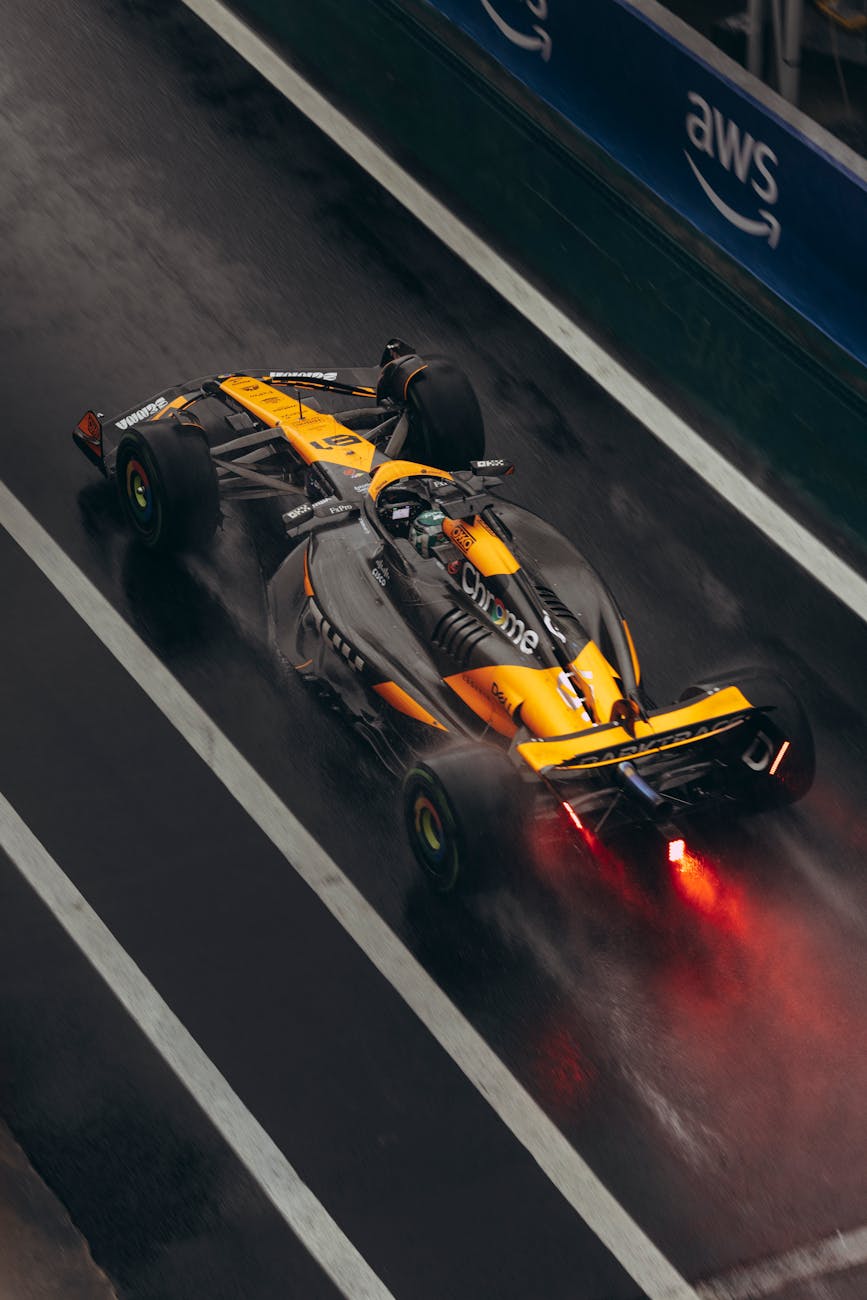
As humans sought to travel farther and faster, mechanical engineers created one of the most transformative machines ever — the automobile.
Cars combine multiple branches of mechanical design:
- Engines and powertrains convert fuel (or electricity) into motion.
- Suspension systems manage vibrations and stability.
- Aerodynamics reduces drag to increase efficiency.
- Braking systems safely convert kinetic energy back into heat.
Every component — from the smallest bolt to the largest piston — is engineered for motion, performance, and safety.
Today, the evolution continues through electric vehicles (EVs) and autonomous systems, proving that mechanical engineering is always adapting to new energy frontiers.
Airplanes: Mastering the Skies
Flight is one of the greatest mechanical challenges humanity ever solved.
Airplanes fly because of precise control over aerodynamics, thrust, and lift — all governed by Newton’s laws of motion. Mechanical engineers design:
- Wings that shape airflow and generate lift.
- Jet engines that produce thrust by compressing and accelerating air.
- Landing gear and control systems that balance massive loads and stresses.
What began as two wooden propellers in the Wright brothers’ workshop has evolved into aircraft that can carry hundreds of passengers halfway across the world in a single flight.
Airplanes are proof that when mechanical principles are understood deeply enough, even gravity becomes negotiable.
Spaceships: Pushing the Limits of Engineering
If bicycles represent simplicity, spaceships represent the extreme edge of mechanical design.
To launch a rocket, engineers must control forces, temperature, and energy at unimaginable scales.
- Rocket engines work on Newton’s Third Law: pushing exhaust gases downward to propel the craft upward.
- Thermal protection systems withstand temperatures hotter than 1,500°C during re-entry.
- Precision mechanics ensure navigation and docking in microgravity.
Every bolt, tank, and turbine must survive forces that would destroy ordinary materials — yet still function perfectly in space’s harsh environment.
Rockets are humanity’s most complex motion machines — and every part of them is mechanical engineering in action.
The Common Thread: Motion, Energy, and Innovation
From the pedals of a bicycle to the engines of a spacecraft, mechanical engineering is all about controlling energy to create motion.
Across centuries, engineers have used the same core principles — force, torque, momentum, friction, and efficiency — to solve different problems at different scales.
| Machine | Core Principle | Energy Source |
|---|---|---|
| Bicycle | Torque, Gear Ratios | Human Power |
| Car | Power Transmission | Fuel or Electricity |
| Airplane | Aerodynamics, Lift | Jet Propulsion |
| Rocket | Thrust, Momentum | Chemical Reaction |
No matter the machine, the laws of mechanics remain the same — only the imagination changes.
Conclusion
Mechanical engineering is more than just building machines — it’s about understanding how motion works in every corner of the universe.
From the quiet spin of a bicycle wheel to the thunder of a rocket launch, every movement starts with an engineer asking:
“How can we make this move better?”
And that question continues to drive innovation — on the ground, in the air, and beyond the stars.




 GearUp Engineering
Leave a comment