Every great leap in technology starts with one thing — a curious mind.
From the sketches of flying machines in the 15th century to rockets landing themselves in the 21st, engineering has always been driven by people who dared to imagine the impossible.
In this post, we’ll travel through time — from Leonardo da Vinci to Elon Musk — to see how mechanical thinkers shaped the world we live in today.
The Renaissance Visionary — Leonardo da Vinci
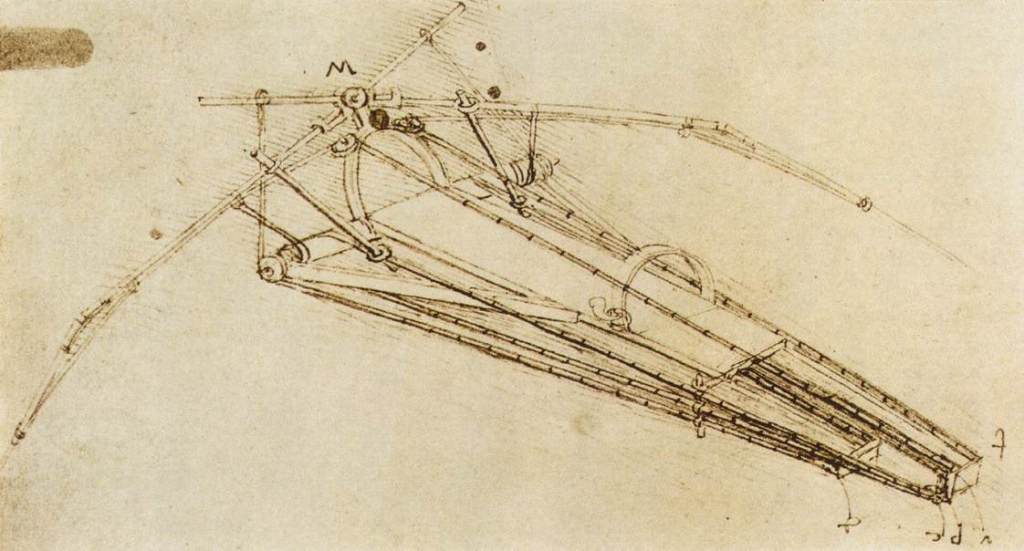
Long before airplanes or engines existed, Leonardo da Vinci (1452–1519) dreamed of machines that could soar through the skies and move with the precision of nature itself.
He wasn’t just an artist — he was one of the earliest mechanical engineers. His notebooks were filled with designs for:
- Flying machines inspired by birds and bats
- Self-propelled carts — the ancestor of modern vehicles
- Helical air screws, the concept behind helicopters
- Bridges, gears, and automata that blended art and mechanics
Though most of his designs never flew, Leonardo’s legacy lies in his way of thinking:
Observe nature, understand the mechanics behind it, and design through curiosity.
That mindset — combining imagination with engineering logic — became the foundation of modern mechanical design.
The Age of Invention — The Industrial Revolution
Fast forward to the 18th and 19th centuries, when the world transformed from muscle power to machine power.
James Watt (1736–1819)
Watt’s improvements to the steam engine powered factories, ships, and trains — fueling the Industrial Revolution and giving birth to mechanical engineering as a profession.
Isambard Kingdom Brunel (1806–1859)
Brunel applied engineering to scale: designing bridges, tunnels, and steamships that connected continents. His work demonstrated how engineering could reshape societies, not just machines.
The Industrial Revolution proved that mechanical thinking wasn’t just about invention — it was about application, transforming ideas into systems that moved the world.
The Age of Motion — 20th Century Pioneers
The 20th century was defined by motion — automobiles, airplanes, and space travel all emerged from mechanical genius.
Henry Ford (1863–1947)
Ford didn’t invent the car, but he revolutionized how it was built.
With his assembly line, Ford turned complex machines into affordable products, changing not just transportation, but the entire concept of manufacturing efficiency.
Ford showed that engineering brilliance isn’t only in invention — it’s in making innovation accessible.
The Wright Brothers (Orville and Wilbur Wright)
In 1903, they achieved the world’s first powered flight.
Their secret?
An engineer’s approach — testing, analyzing, and redesigning hundreds of wing shapes in their homemade wind tunnel.
They proved that success in engineering often comes not from luck, but from iteration and precision.
The Modern Visionary — Elon Musk
Enter the 21st century — a time when the line between mechanical engineering and innovation blurs into one.
Elon Musk embodies the modern mechanical mind: blending physics, materials science, and systems engineering to tackle the biggest challenges of our time.
Through Tesla, he redefined the automobile with electric powertrains, efficient aerodynamics, and lightweight design.
With SpaceX, he reignited the dream of space exploration — not just by building rockets, but by reengineering how we think about cost, reusability, and sustainability.
Like Leonardo 500 years earlier, Musk combines imagination with technical execution — the very heart of mechanical creativity.
The Common Thread: Curiosity and Courage
From da Vinci’s sketches to SpaceX’s rockets, the greatest engineers share two things:
curiosity and courage.
They:
- Ask “why” and “how” when others accept things as they are.
- See problems not as obstacles but as puzzles.
- Merge art, science, and persistence to bring ideas to life.
The true spirit of mechanical engineering lies not in machines, but in the minds that create them.
The Legacy of Mechanical Minds
Every innovation we enjoy today — from airplanes and electric cars to elevators and wind turbines — is built on centuries of mechanical thought.
Each era adds a new layer:
- Da Vinci dreamed.
- Watt and Brunel built.
- Ford and the Wrights refined.
- Musk and modern engineers revolutionized.
And the story isn’t over — it’s just beginning.
Because the next “mechanical mind” shaping the future could be you.
Conclusion
Mechanical minds have always shared one timeless goal: to understand how things work — and then make them work better.
From wooden sketches to reusable rockets, every gear turned and every engine built brings us one step closer to understanding the incredible world of motion, energy, and design.
The tools have changed, but the curiosity remains the same.
That’s how humanity moves forward — one idea at a time.






 GearUp Engineering
Leave a comment