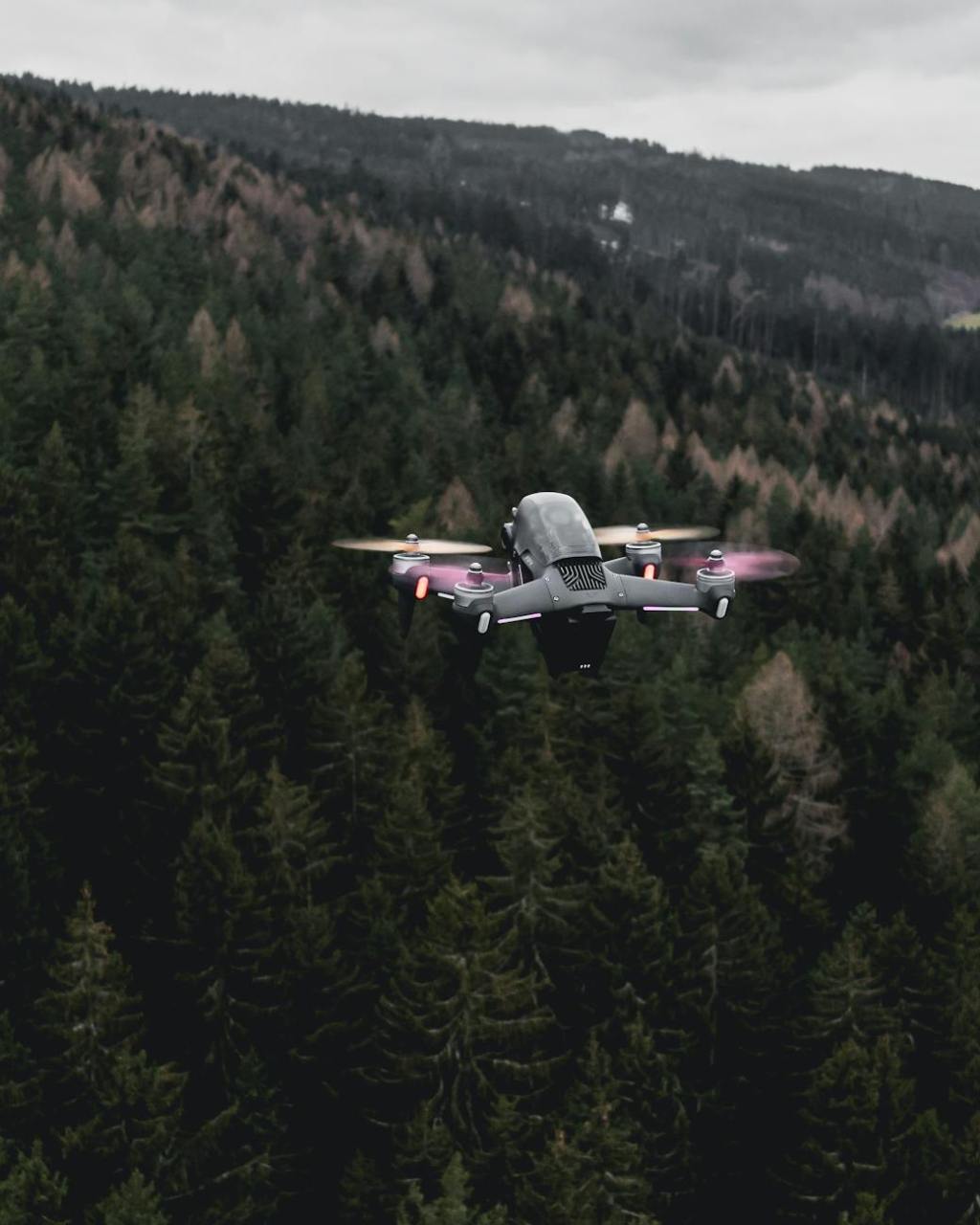
Not long ago, drones were futuristic gadgets seen only in movies. Today, they’re everywhere — from capturing cinematic videos to delivering packages and helping farmers monitor crops.
But what exactly are drones, and how do they work?
Let’s explore the fascinating world of drones — how they fly, how they stay stable, and the incredible things they’re used for today.
What Is a Drone?
A drone, or Unmanned Aerial Vehicle (UAV), is an aircraft that flies without a pilot onboard. It’s controlled either remotely by a human operator or autonomously using onboard sensors and computer systems.
Modern drones come in all shapes and sizes — from small palm-sized quadcopters to large military or cargo drones that can fly for hours.
At their core, all drones share a few key components:
- Propellers and motors for lift and movement
- Batteries for power
- Flight controller for stability and navigation
- Sensors (gyroscopes, GPS, cameras, and altimeters) to guide flight
How Drones Fly
Most consumer drones are quadcopters, meaning they have four propellers — two spinning clockwise and two counterclockwise.
Here’s how they work:
- The rotating propellers push air down, generating lift.
- The flight controller constantly adjusts motor speeds to balance pitch, roll, and yaw.
- By changing how fast each propeller spins, drones can move forward, backward, sideways, or rotate in place.
Drones stay stable in air using gyroscopes, accelerometers, and barometers that detect tilt, acceleration, and altitude — adjusting the motors thousands of times per second.
This combination of physics and computer control is what lets drones hover perfectly still in midair.
Types of Drones
Drones can be categorized based on their design and purpose:
- Multirotor Drones:
- Most common (quadcopters, hexacopters, octocopters)
- Easy to control, great for photography and small-scale applications
- Fixed-Wing Drones:
- Shaped like airplanes
- Fly longer distances using aerodynamic lift
- Used for mapping, surveillance, and cargo delivery
- Hybrid VTOL (Vertical Take-Off and Landing) Drones:
- Combine vertical takeoff of a multirotor with the speed and range of a fixed-wing design
- Used for industrial or long-range missions
Common Applications of Drones
1. Aerial Photography and Videography
Drones revolutionized filmmaking and media. From real estate to travel vlogs, they capture stunning aerial perspectives once only possible with helicopters.
2. Agriculture
Farmers use drones for crop health monitoring, pesticide spraying, and soil analysis — saving time and resources while improving yields.
3. Mapping and Surveying
Equipped with LiDAR or high-resolution cameras, drones can create detailed 3D maps of terrain, construction sites, or disaster zones faster than traditional methods.
4. Disaster Management and Rescue
Drones assist during floods, wildfires, or earthquakes — delivering supplies, spotting survivors, and surveying damage in places unsafe for humans.
5. Industrial Inspections
Power lines, wind turbines, pipelines, and bridges are now inspected by drones — reducing human risk and improving accuracy.
6. Delivery Systems
Companies like Amazon, Zipline, and Wing are testing drone-based delivery networks for medical supplies and consumer goods.
7. Defense and Security
Military and surveillance drones can cover large areas, gather intelligence, and support missions while keeping human operators out of harm’s way.
Challenges in Drone Technology
While drones are becoming more advanced, engineers still face several key challenges:
- Battery life: Most drones fly for only 20–30 minutes.
- Regulations: Airspace laws vary across countries and limit where drones can fly.
- Safety: Drones must avoid collisions with birds, buildings, or aircraft.
- Weather resistance: Strong winds or rain can destabilize smaller drones.
Overcoming these challenges requires ongoing innovation in battery chemistry, AI navigation, and materials design — all core areas of mechanical and aerospace engineering.
The Future of Drones
The next generation of drones will be smarter, faster, and more autonomous.
They’ll use AI-powered vision systems, longer-lasting batteries, and even hydrogen fuel cells to extend flight time.
In the future, drones could form flying networks — coordinating in real time to deliver packages, inspect cities, or monitor the environment efficiently.
The ultimate goal: drones that think, fly, and adapt on their own — just like birds.
Conclusion
Drones represent the perfect blend of physics, engineering, and imagination.
By mastering lift, balance, and control, they’ve opened the skies to innovation — transforming industries from filmmaking to medicine.
Every flight is a reminder that mechanical engineering isn’t just about gears and engines — it’s about understanding motion, balance, and design in any environment.
The world of drones is only just taking off — and the next frontier may be right above us.




 GearUp Engineering
Leave a comment