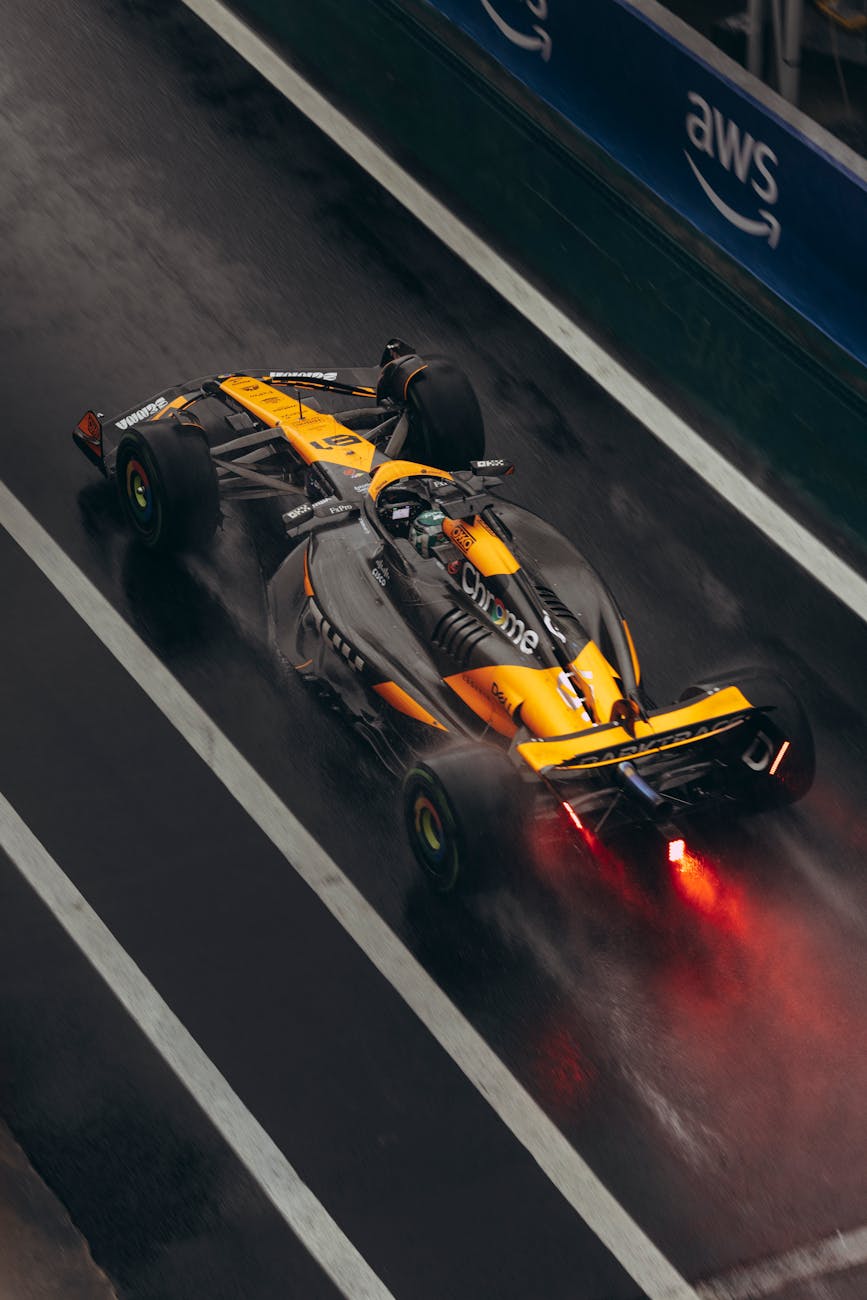
Formula 1 isn’t just a sport — it’s an engineering battlefield. Every tenth of a second gained on the track is the result of thousands of hours of design, simulation, and testing.
But as the competition gets tighter and sustainability becomes key, the way F1 teams build cars is evolving fast.
The future of Formula 1 engineering will be driven by AI, digital simulation, and advanced manufacturing technologies like 3D printing — pushing the limits of speed, efficiency, and innovation.
Formula 1: The Fastest Engineering Lab on Earth
Every F1 car is a rolling experiment — a fusion of aerodynamics, materials science, electronics, and precision mechanics.
Teams make hundreds of design decisions before a single lap is completed.
Traditionally, engineers relied on wind tunnels and physical prototypes, but today’s pace of competition demands something faster: data, algorithms, and digital twins.
Modern F1 design is now as much about coding and computation as it is about wrenches and carbon fiber.
Artificial Intelligence: The Engineer’s New Teammate
AI is transforming how engineers design, analyze, and optimize every component of an F1 car.
Design Optimization
AI-driven tools use machine learning to analyze aerodynamic efficiency, heat management, and stress distribution.
These systems can test millions of design variations digitally — far faster than humans ever could.
- Generative design algorithms create parts with organic shapes that minimize weight while maximizing strength.
- AI simulation tools automatically tweak designs for better airflow or cooling efficiency.
Predictive Performance
During races, AI analyzes real-time telemetry data from over 300 sensors across the car — predicting tire wear, fuel use, and potential component failures.
Instead of reacting, teams can now anticipate — adjusting strategy before problems even appear.
Driver-Assist Insights
Machine learning also helps drivers improve, analyzing racing lines, braking points, and throttle behavior to suggest optimal lap strategies.
AI doesn’t replace engineers or drivers — it enhances their decision-making.
3D Printing: Rapid Innovation at Record Speed
In Formula 1, time is everything — and 3D printing (additive manufacturing) is changing how quickly teams can test and build new parts.
- Rapid Prototyping: Engineers can now design, print, and test aerodynamic components within days instead of weeks.
- Lightweight Custom Components: 3D printing allows complex internal geometries that traditional machining can’t achieve.
- Trackside Manufacturing: Some teams even use mobile 3D printers during race weekends for last-minute adjustments or replacements.
Material innovation is key here — carbon composites, titanium powders, and high-temperature polymers are enabling parts strong enough for race conditions.
Every gram saved and every hour gained can mean the difference between first and second place.
Simulation: Racing Before the Race
Physical wind tunnels and on-track tests are expensive and limited.
That’s why teams now rely heavily on computational fluid dynamics (CFD) and digital twin technology.
A digital twin is a virtual replica of the entire F1 car — every surface, sensor, and moving part simulated in real time.
This allows engineers to:
- Run thousands of virtual tests for aerodynamics, cooling, and structural loads.
- Simulate race conditions including weather, tire degradation, and fuel consumption.
- Optimize designs before ever manufacturing them.
CFD software like ANSYS and Siemens STAR-CCM+ enables incredibly accurate airflow modeling — so precise that teams can simulate turbulence from a competitor’s car in front.
Before a car hits the track, it’s already raced hundreds of virtual laps in the digital world.
The Push Toward Sustainability
As F1 aims for net-zero carbon emissions by 2030, technology will play a key role in sustainability:
- AI-driven fuel management to reduce consumption.
- 3D-printed recyclable components to cut material waste.
- Digital testing to minimize physical prototypes and shipping.
F1’s future innovations will not only make cars faster — but also greener and more efficient, influencing road car design worldwide.
The Next Decade of F1 Engineering
The future Formula 1 engineer might spend as much time coding algorithms as designing suspension arms.
AI will predict the next aerodynamic breakthrough, 3D printers will produce it overnight, and simulations will test it before sunrise.
The race for speed is becoming a race for intelligence — one where data, precision, and creativity decide the winner.
Formula 1 has always been about pushing limits — now, those limits are digital.
Conclusion
Formula 1 has evolved from mechanical experimentation to computational mastery.
AI, 3D printing, and advanced simulation are rewriting what’s possible — creating a future where design cycles shrink, efficiency grows, and innovation never stops.
The engineers of tomorrow won’t just build faster cars — they’ll build smarter machines that redefine the meaning of performance.



 GearUp Engineering
Leave a comment