The Engineering Behind Curved Roads and Banked Tracks
Have you ever noticed that sharp roads, racetracks, and even highways are slightly tilted instead of being perfectly flat? At first glance, it might seem like a small design detail — but in reality, banked curves are a brilliant piece of engineering that keeps vehicles safe and stable at high speeds.
Let’s break down the science behind it.
What Happens When a Car Takes a Turn?
When a car moves in a straight line, everything feels normal. But the moment it enters a curved path, physics kicks in.
To turn, a car needs a force pulling it towards the center of the curve. This force is called centripetal force. Without it, the car would simply continue straight and fly off the road.
On a flat road, this centripetal force comes mainly from friction between the tires and the road. But friction has a limit — especially:
- at high speeds
- on wet or slippery roads
That’s where banking comes in.
Why Roads and Tracks Are Banked
A banked road or track is tilted inward toward the center of the curve. This tilt allows part of the car’s weight (gravity) to help provide the required centripetal force.
In simple terms:
- Gravity pushes the car downward
- The angled surface redirects part of that force sideways
- This sideways component helps the car turn safely
Because of this, the car relies less on friction, making the turn safer and smoother.
The Physics Behind Banking
On a banked curve:
- The normal force from the road acts at an angle
- This force has:
- a vertical component (balancing gravity)
- a horizontal component (providing centripetal force)
At the ideal design speed, a vehicle can take the curve without any friction at all. That’s why race tracks can handle extremely high speeds without cars sliding outward.
Why Racetracks Have Extreme Banking
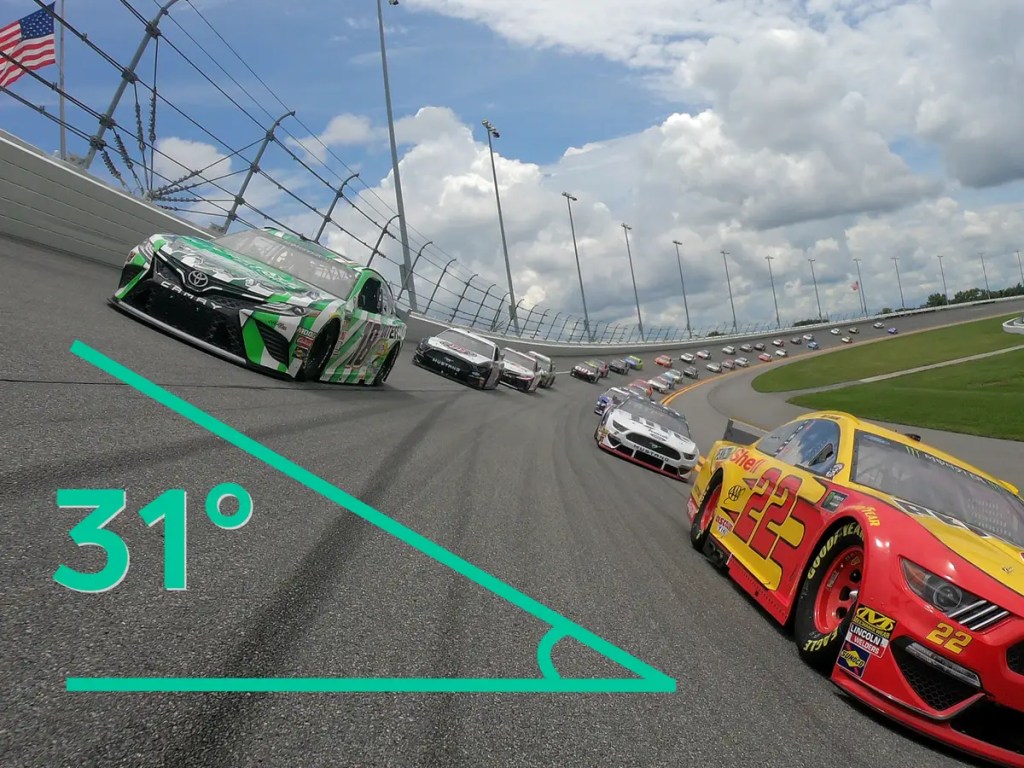
Racetracks like oval circuits have very steep banking, sometimes over 30 degrees. This allows race cars to:
- take corners at extremely high speeds
- maintain stability
- reduce tire slip
Higher banking = higher safe cornering speed.
That’s why:
- City roads → gentle banking
- Highways → moderate banking
- Racetracks → extreme banking
Each is designed based on speed, safety, and vehicle type.
What If Roads Were Flat?
If curved roads were completely flat:
- Cars would rely only on friction to turn
- Skidding would be much more common
- Speed limits would need to be much lower
Banking allows engineers to increase safety without slowing traffic — a perfect example of smart design using physics.
Engineering in Everyday Life
What makes banked roads fascinating is that we experience this engineering every day without noticing it. From highways to race tracks, engineers use forces like gravity and friction to work with physics, not against it.
It’s a reminder that even something as ordinary as a curved road is the result of careful calculations, experiments, and real-world testing.
Curved roads and banked tracks show how simple physics concepts like forces and motion can solve real-world problems. By tilting the road just a little, engineers make driving safer, smoother, and faster.
For me, that’s what makes engineering exciting — understanding the hidden science behind everyday things we often take for granted.



 GearUp Engineering
Leave a comment